Muccia
Details
On the banks of the Chienti River, located at an important road junction dating back to ancient times, Muccia is home to numerous archaeological finds from the Neolithic era and remarkable 15th-century churches.
In the Middle Ages, originally known as Mutia, it was a strategic center for the processing and trade of cereals, so much so that the Da Varano family of Camerino built a castle there to defend the mills.
The Blessed Rizzerio, a follower of Saint Francis of Assisi, was born in this town.
The town also hosts the Varnelli Distillery, a renowned producer of alcoholic beverages.
Finally, the project will enhance and promote religious tourism thanks to the presence of the hospitality of the BEATO RIZZEIRO in a peaceful and tranquil setting.
Gallery
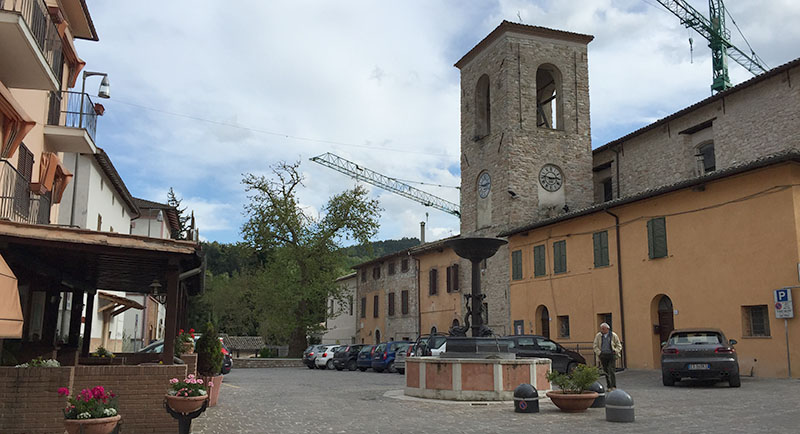
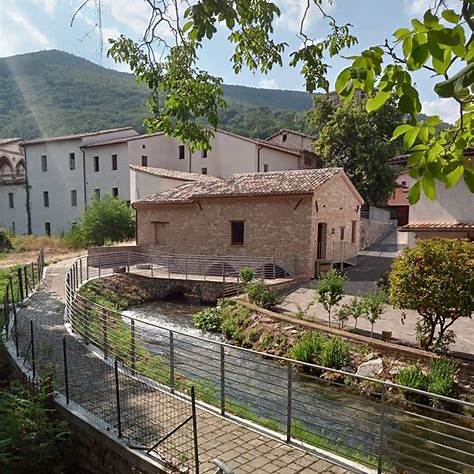
In the Middle Ages, Muccia was under the lordship of the Da Varano family of Camerino, a period during which the main castle was built to protect several mills serving the local populations. The area was the target of numerous raids that completely destroyed the Castle of Giove and partially damaged the Castle of Preofoglio in the Massaprofoglio area, which is currently under restoration.
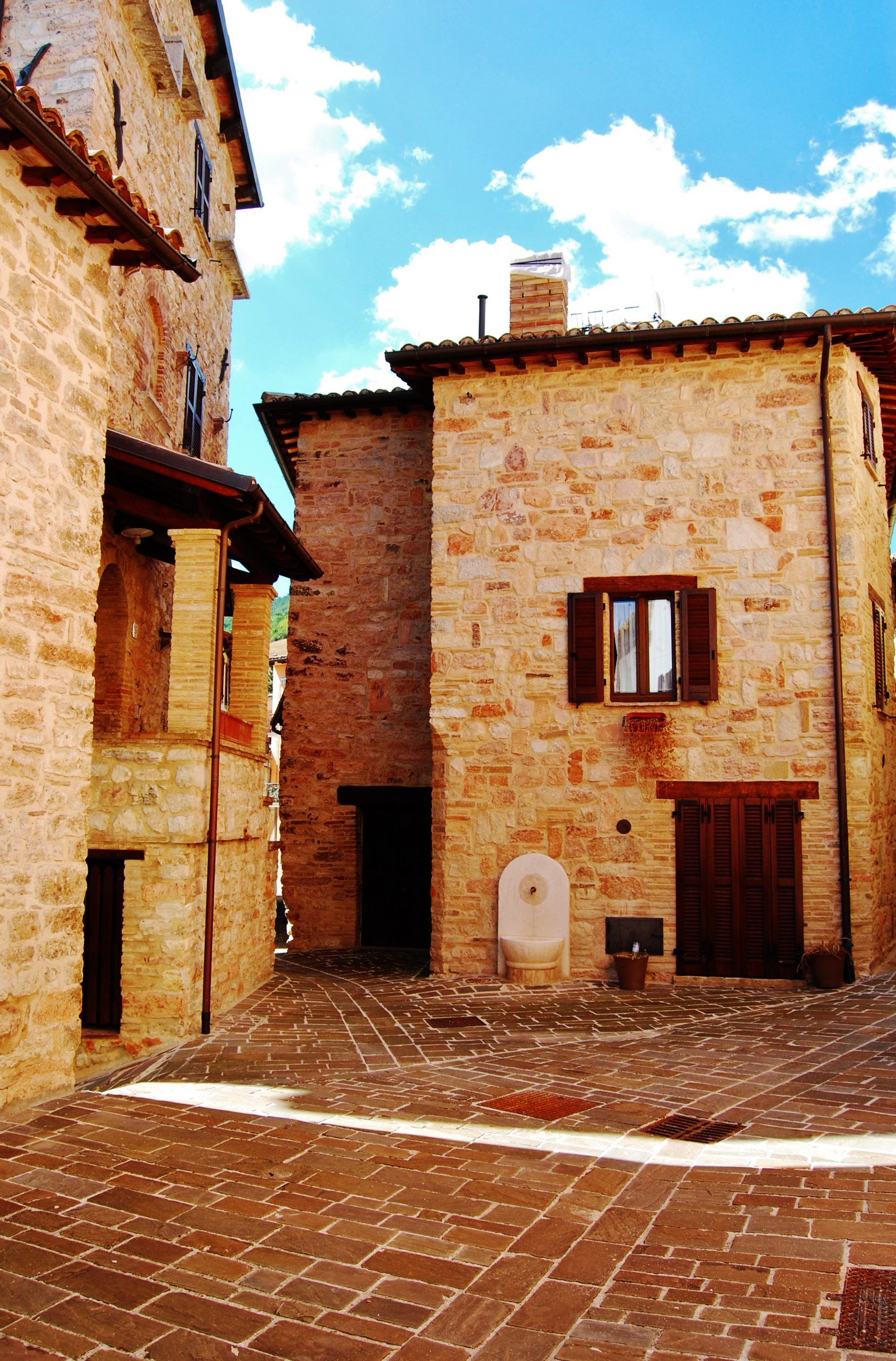
Nevertheless, the main village still retains its medieval layout with narrow streets and medieval houses, where the "doors of the dead" are particularly noticeable. The surrounding area, rich in historical and artistic testimonies, is immersed in unspoiled nature, dominated by wooded vegetation, with predominant holm oaks, hornbeams, and ash trees. The village features a sports center with a swimming pool and a tennis court, but visitors can also enjoy numerous hiking or mountain biking trails.
The Blessed Rizzerio, a follower of Saint Francis of Assisi and the founder of a beautiful Franciscan hermitage, was born here. The hermitage, now equipped with a meeting room and complementary accommodation facilities, is an oasis of peace and meditation.
Muccia has always been a place rich in flavors; the area is renowned for its different types of pecorino cheese, cured meats, black truffles, and beverages such as Amaro Sibilla and Varnelli, an anise-based liqueur.
The municipality is part of the National Association of Liquor Cities, based in Saronno, and is part of the Sibillini Mountains, Lands of Parks and Charms tourist circuit, with the aim of promoting and enhancing the local tourist offer.
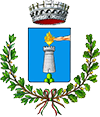
The Archaeological Museum of Ancona houses numerous artifacts from the territory of Muccia, as evidence of human presence dating back to at least the Neolithic period. According to tradition, the name of the town is believed to refer to Mutius Scaevola, the Roman commander who allowed his hand to be burned in order to avoid killing the Etruscan king Porsenna.
The Castle of Prefoglio: Ruins of a medieval fortification of the Da Varano dukes, located in the Massaprofoglio district. The Church of Santa Maria di Varano: An octagonal-shaped church that houses valuable works by Andrea de Magistris. The Torre di Massa or Torraccia: A tower at 808 meters above sea level, located near Massaprofoglio. The Church of the Madonna in Col di Venti: Built on the site where, according to legend, two German pilgrims were forced to stop while trying to take the table of the Virgin with Child to Rome (14th century).