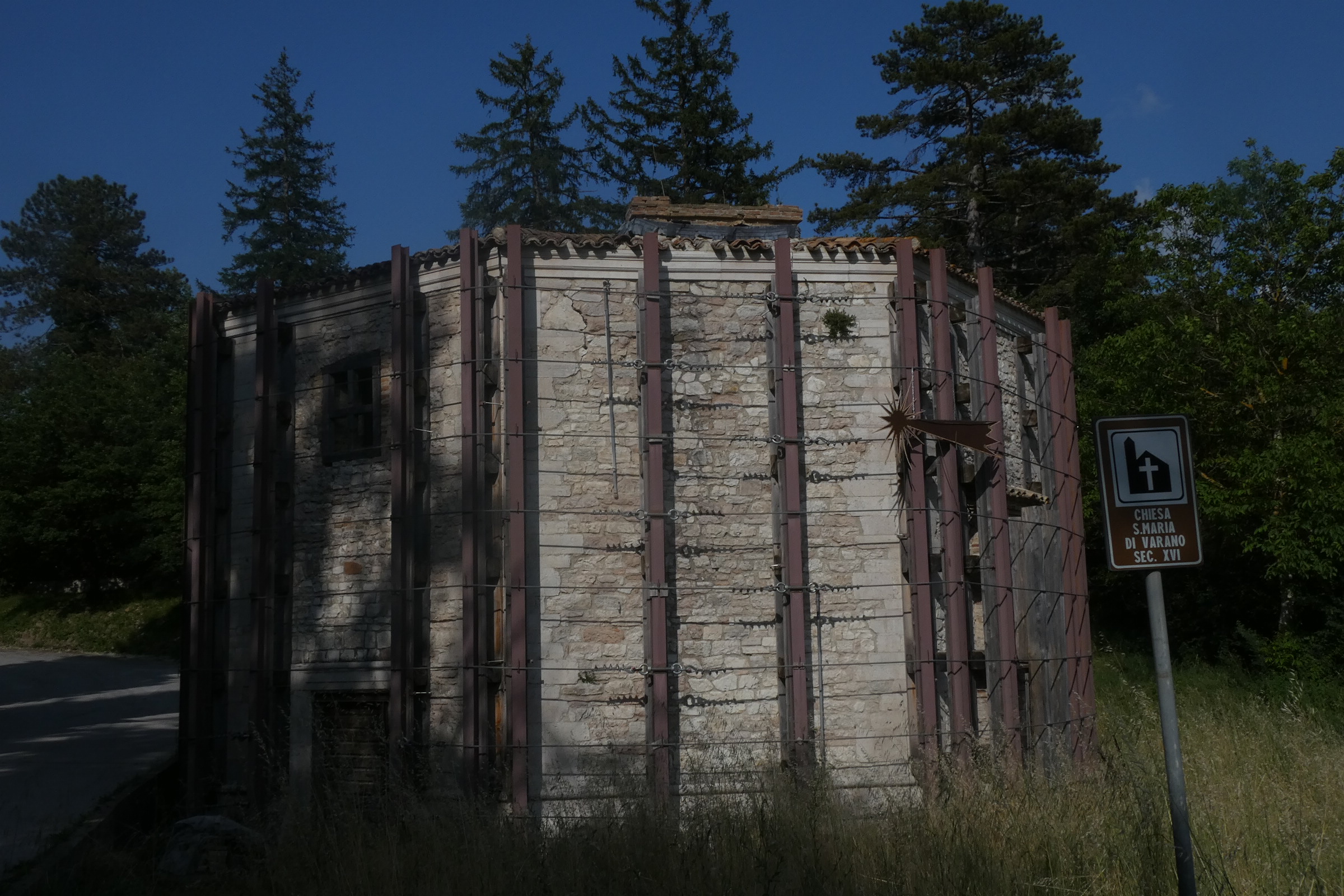
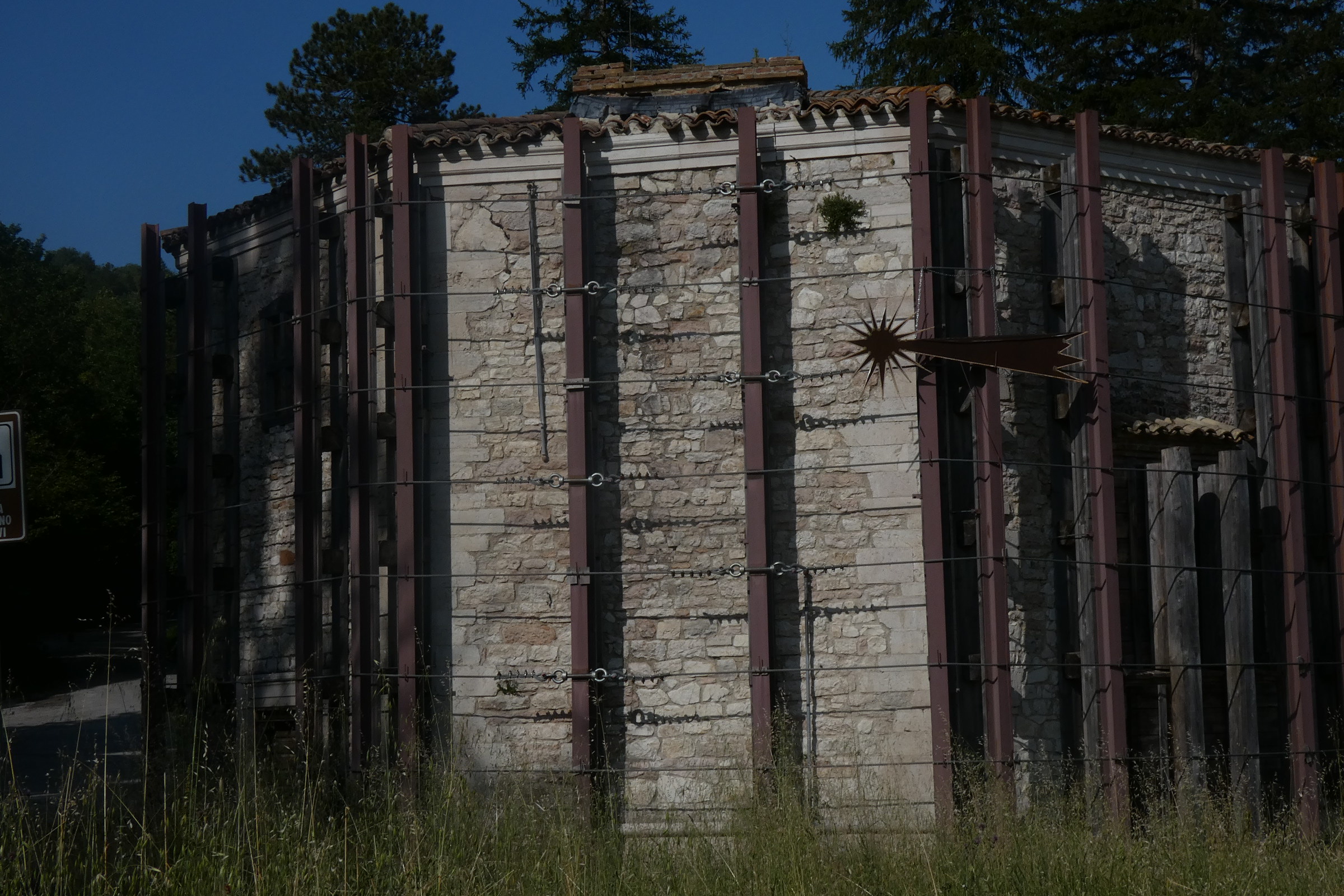
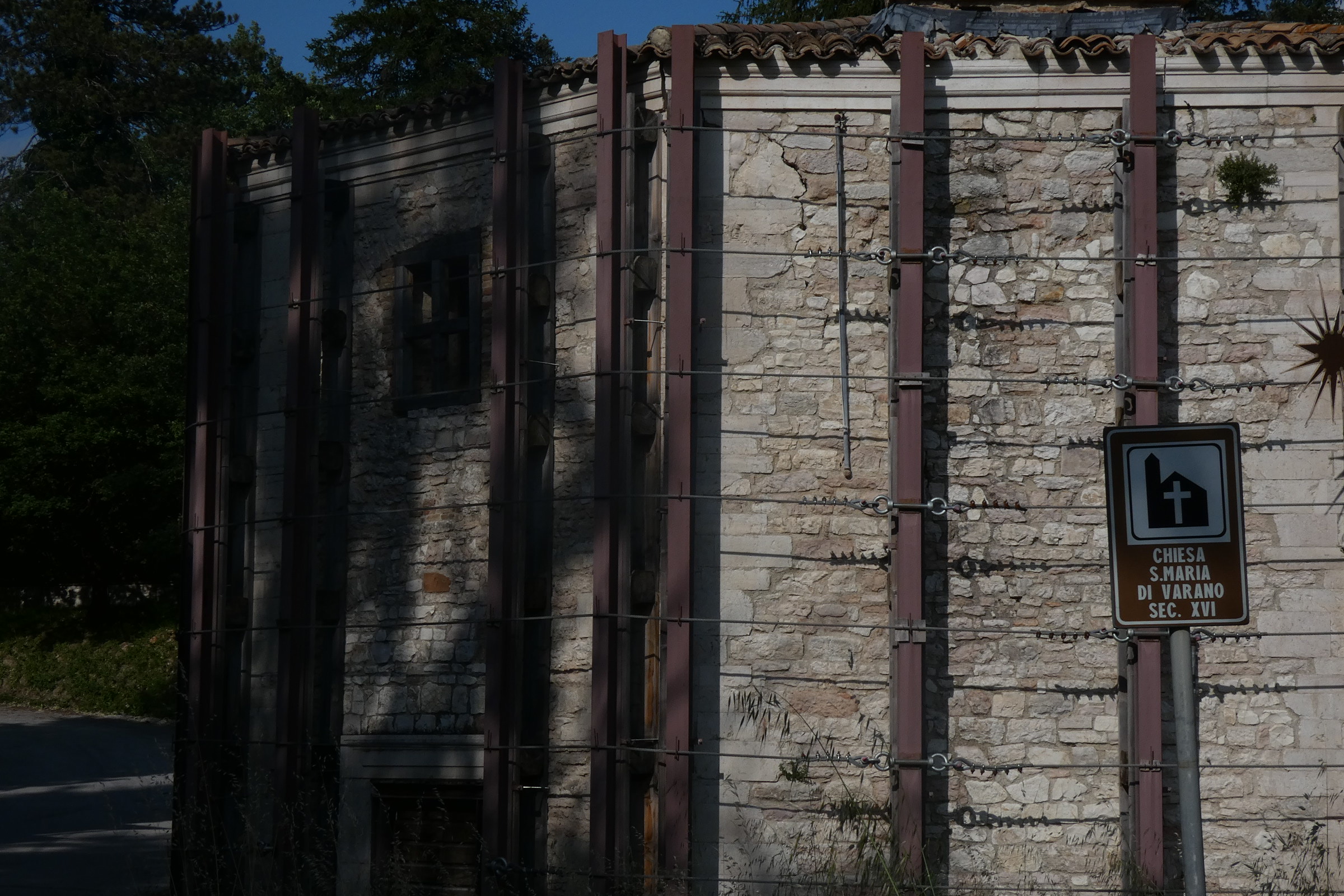
Madonna di Varano Church
Details
Essential Summary
-
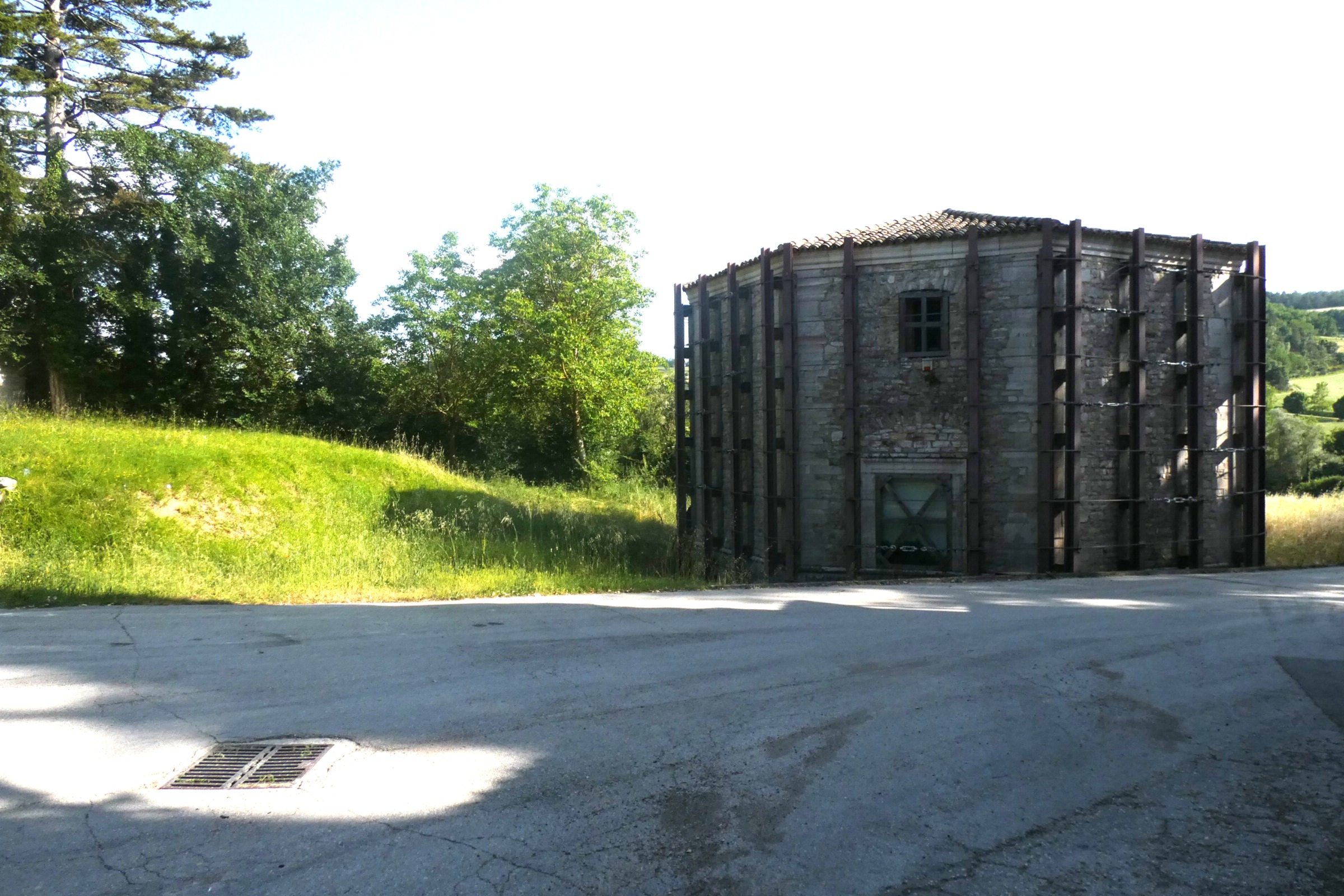
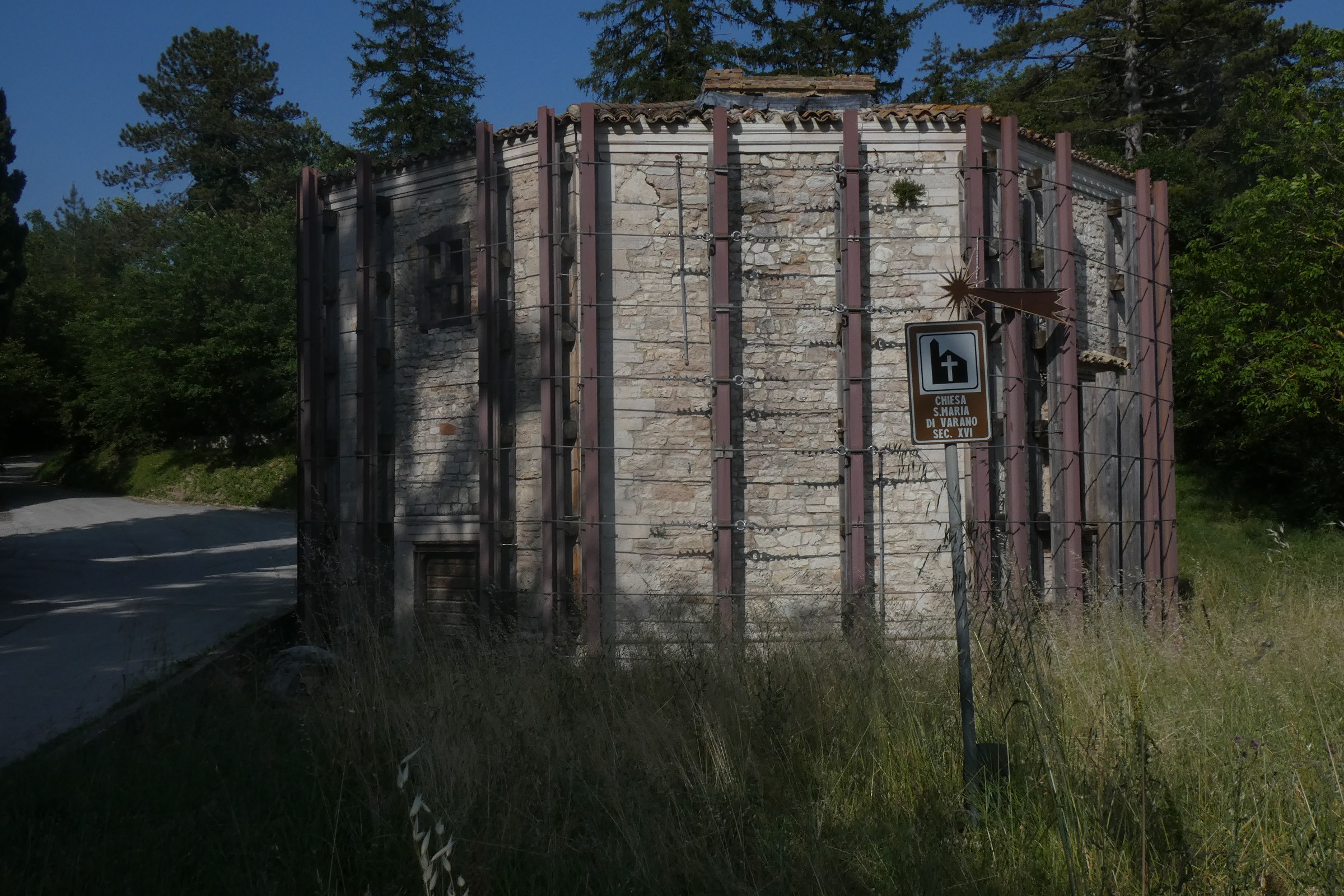
Plan: Octagonal, 16th century
-
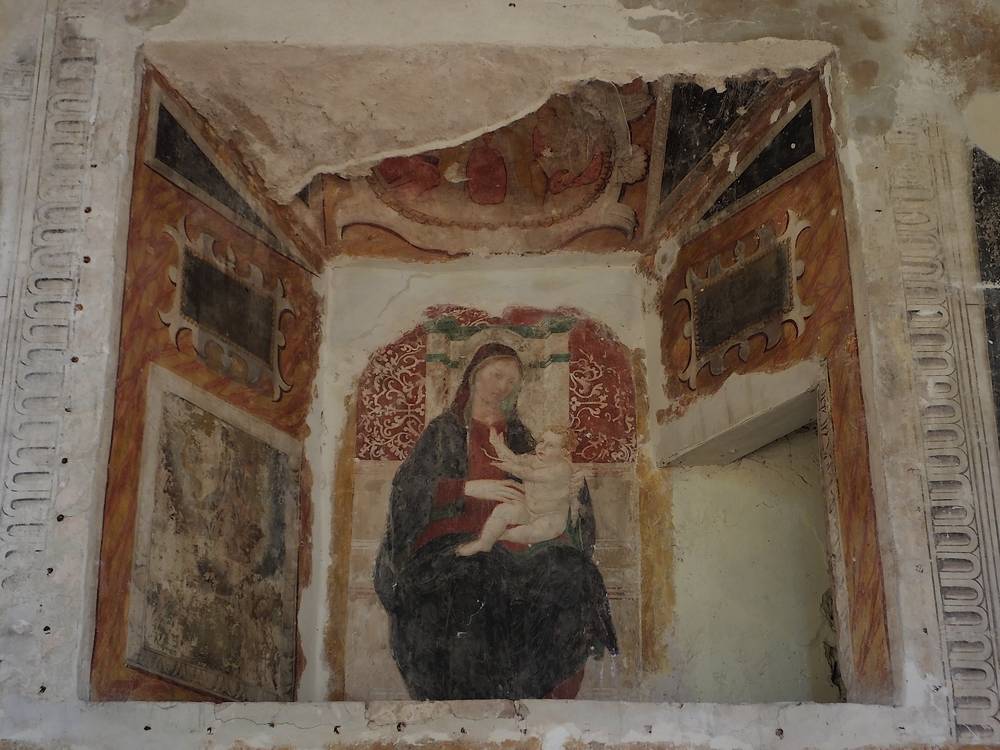
Art: Frescoes by Andrea de Magistris, especially the Madonna and Child
-
Function: Devotion/religion, meditation, local veneration
-
Today: Cemetery chapel
-
Accessibility: NOT ACCESSIBLE
The Church of Madonna di Varano was likely built by the Da Varano family of Camerino at the beginning of the 16th century as a votive chapel following a period of famine and plague caused by the advance of the Landsknechts.
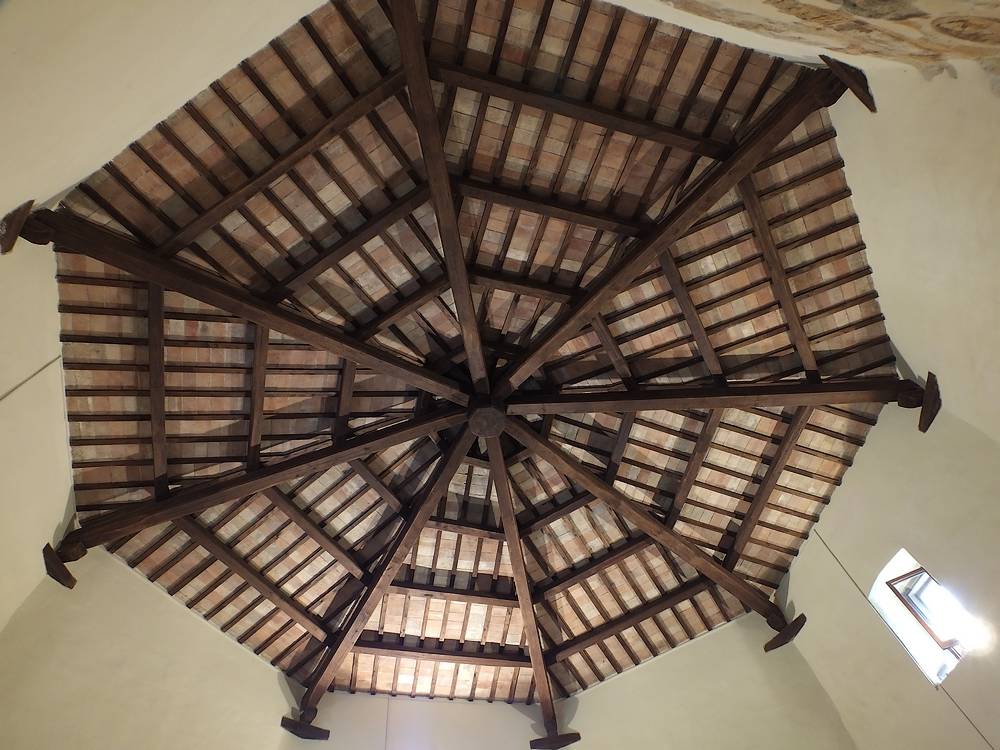
It is attributed to the same craftsmen who worked on the Sanctuary of Macereto in Visso, with which it also shares an octagonal structure. Inside, several frescoes can be found, including the Madonna and Child by Andrea de Magistris. The roof is constructed with wooden beams and terracotta tiles. The small bell gable was likely added later, as it is made of brick rather than the stone used for the rest of the building.
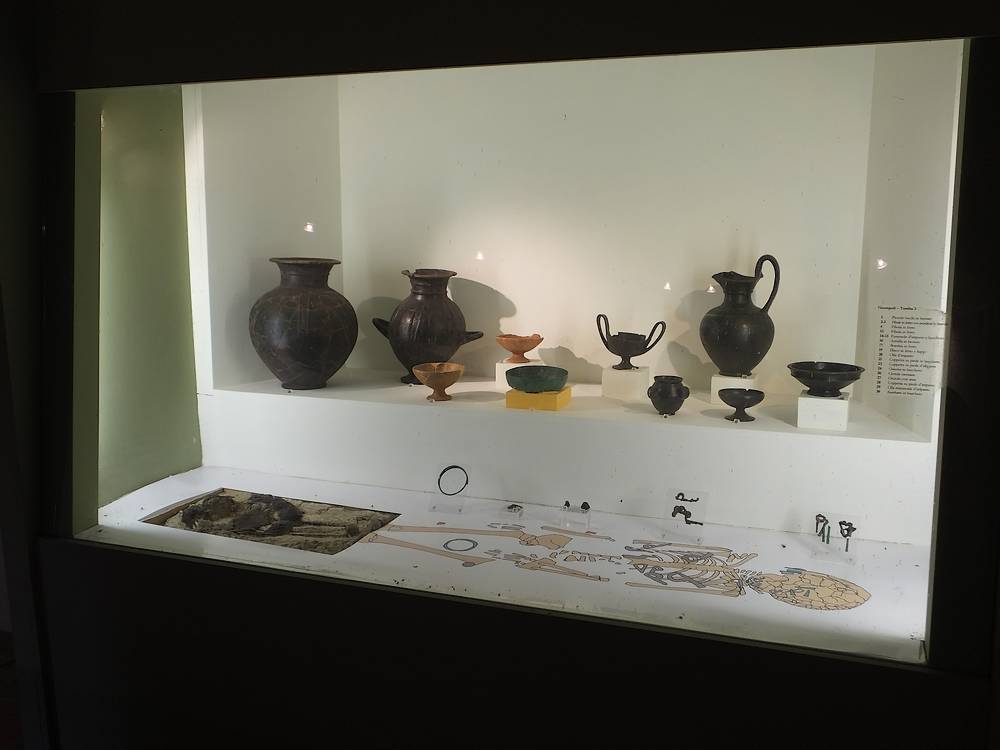
The Church of Madonna di Varano also housed the Archaeological Museum “Muccia: Ancient Crossroads of the Apennines,” which preserved artifacts discovered in the Muccia area during excavations conducted by Delia Lollini in the 1960s. Research was later resumed between 2001 and 2003 through a joint initiative involving the Archaeological Superintendency of the Marche, the University of Rome “La Sapienza,” and the University of Pisa.
The church was damaged by the 1997 earthquake and restored from 1999 to 2001 with funds from the European Investment Bank.
The 2016 earthquake caused further damage, and the church is currently unsafe.
Gallery