Beato Rizeiro
Biography
Bonconte nacque nella famiglia umbra dei conti Baschi, fu avviato agli studi giuridici e inviato a Bologna, dove ebbe per compagno il suo corregionale Pellegrino da Falerone. Dopo l'arrivo in città di san Francesco (5 agosto 1222) i due decisero di seguirlo: fu ministro provinciale della Marca d'Ancona.[1] Trascorse gli ultimi anni di vita in un eremo nei pressi di Muccia, dove si spenseBonconte was born into the Umbrian noble family of the Counts of Baschi. He pursued legal studies and was sent to Bologna, where he studied alongside his fellow Umbrian Pellegrino da Falerone. After the arrival of Saint Francis of Assisi in the city (August 5, 1222), both decided to follow him. Bonconte later became provincial minister of the Marche region. He spent the final years of his life in a hermitage near Muccia, where he eventually passed away.[2]
Within the Baschi family, a long-standing series of family feuds persisted. The three sons of Ugolino di Baschi—Ugolino, Bonconte, and Ranieri—were divided over matters of inheritance and interest. Having heard Francis preach at Alviano, Bonconte proposed that the Saint act as mediator between them. Francis agreed to meet the brothers in order to reconcile their disputes. Through his fervent exhortations, he succeeded in persuading them to lay down their arms. In gratitude for this peace, the three brothers donated to Francis an ancient building with adjacent land on the left bank of the Tiber River. There, Saint Francis began the construction of the convent of Pantanelli, near the castle of Baschi.
Bonconte was deeply moved by the “Poor Man of Assisi”, who had managed to restore peace to his family, and chose to follow in Francis’s footsteps by becoming a friar. He took the name Rizzerio and donned the postulant’s habit. From 1221 to 1224, he was chosen to accompany and care for the ailing Francis of Assisi as his guardian. The two lived side by side at Santa Maria degli Angeli and in the hermitage of Greccio.
Later, Rizzerio left Francis for a time to prepare for ordination in Rieti, but the two were reunited in Assisi shortly before the Saint’s death. After Francis’s passing, internal disputes arose within the Order, and Rizzerio decided to withdraw into a life of solitude in the lands of the Baschi family near Muccia, dedicating himself to prayer and contemplation.[2]
Veneration
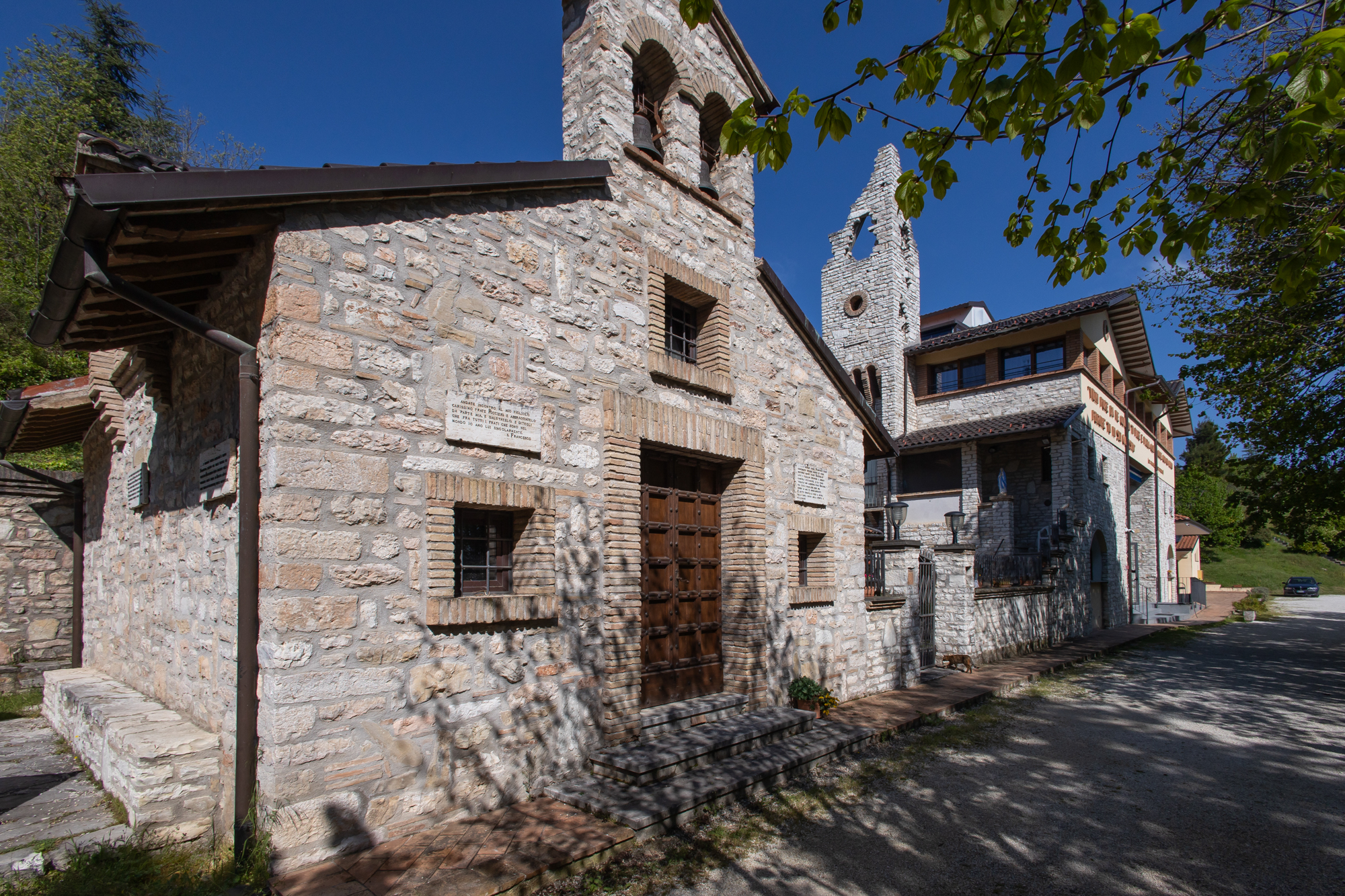
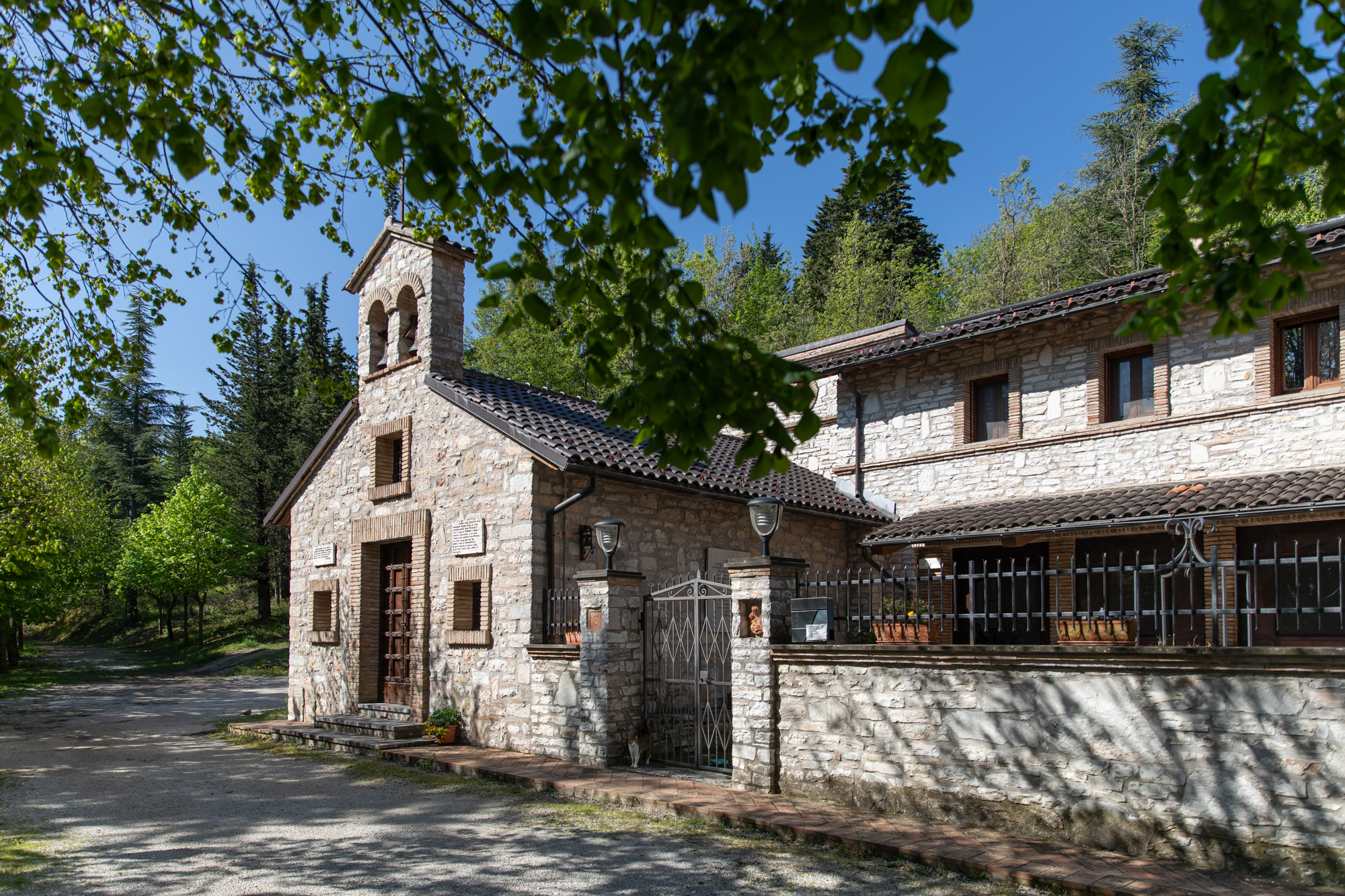
Rizzerio’s body was buried in the Church of San Giacomo near Muccia, which was later demolished.[2]
Pope Gregory XVI, by decree dated December 14, 1838, confirmed his cult, bestowing upon him the title of Blessed.[3]
His feast day is commemorated in the Roman Martyrology on February 7.[4]
References
Giacinto Pagnani, Bibliotheca Sanctorum, vol. XI (1968), col. 227.
Giacinto Pagnani, Bibliotheca Sanctorum, vol. XI (1968), col. 228.
Index ac status causarum (1999), p. 460.
Roman Martyrology (2004), p. 188.
Bibliography
The Roman Martyrology: Revised in accordance with the decrees of the Second Vatican Council and promulgated by Pope John Paul II, Vatican City, Libreria Editrice Vaticana, 2004.
Congregatio de Causis Sanctorum, Index ac status causarum, Vatican City, 1999.
Filippo Caraffa and Giuseppe Morelli (eds.), Bibliotheca Sanctorum (BSS), 12 vols., Giovanni XXIII Institute, Pontifical Lateran University, Rome, 1961–1969